

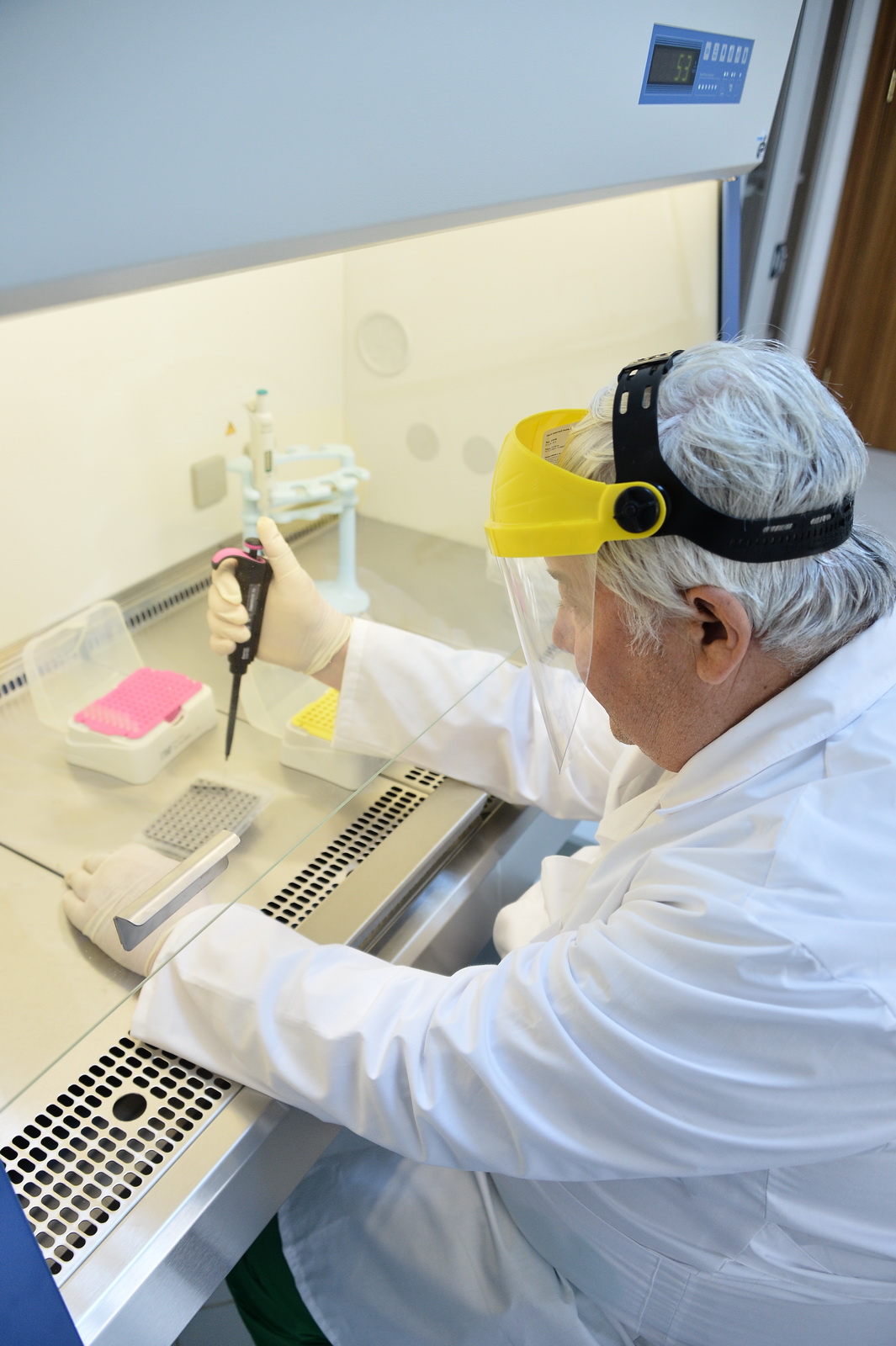
Paying great attention to the purity of Akhal-Teke horses, improving their speed and beauty, and competently maintaining breeding documentation, the esteemed President set specific tasks in this area for their implementation. In order to achieve international standards, modern technologies are being introduced into horse breeding. The use of new advanced technologies in laboratories creates all the conditions for obtaining high results in scientific and other research. Modern advances in molecular genetics have made it possible to analyze the horse genome and also help in selection and breeding work in Akhal-Teke horse breeding.
At the same time, in order to preserve the purity of Akhal-Teke horses, genetic marker analysis methods are used in selection and breeding work, that is, genetic information allows us to obtain high results. As is known, the International Academy of Horse Breeding named after Aba Annaev, as well as the Scientific and Production Center for Akhal-Teke Horse Breeding, which includes a molecular genetics laboratory, which was awarded the International Society of Animal Genetics Certificate of Participation (ISAG Certificate of Participation) in 2023, were established in the city of Arkadag.
The Department of Molecular Genetics uses technologies from Thermo Fisher Scientific (USA), one of the world's leading companies that supplies equipment to biological, medical and industrial laboratories, and also facilitates the organization of molecular genetic research in various laboratories. Molecular genetic studies are carried out in four stages in order to establish the relationship of Akhal-Teke horses based on microsatellite markers genotyping method:
The first stage involves the extraction of DNA from horse hair follicles. For this purpose, a special QIAGEN reagent kit, special test tubes, as well as laboratory dispenser kits, a centrifuge for microtubes, a thermoshaker and shaker for shaking samples, and an Invitrogen Qubit 4 fluorometer for counting the extracted DNA are used.
At the second stage, an amplification reaction (polymerase chain reaction) iscarried out, which is carried out with the aim of increasing the number of copies of genetic markers of horses. For its implementation, a special set of reagents “Equine Genotypes Panel 1.1” is used, which includes 17 genetic markers for establishing kinship. The amplification reaction (PCR) is carried out in a special amplifier “Simpli Amp” according to the program.
The third stage involves fragment analysis. At this stage, studies are conducted on Seq Studio equipment, and DNA fragmentation (separation) and processing of the obtained data are also performed. A 96-well plate, computer software and Internet connections (Wi-fi) allow for rapid analysis on the Seq Studio analyzer.
At the fourth stage, the genotyping results are interpreted – the decoding and reading of the information obtained is carried out on a computer using a special program “GeneMapper”, and the analysis results are entered into the database.
Thus, based on the work done, a database was created and today the total number of genotyped horses is 5.5 thousand. To carry out work in the molecular genetics department to determine the relationship of horses and improve the quality of research, it is planned to introduce the bioinformatics method into the work of the molecular genetics laboratory.
Konstantin GOLOVKIN,
Head of the Department
Molecular Genetics
Horse Breeding Research Center
of the State Association "Turkmen Atlary"