

As is known, Ahalteke horses are one of the oldest and most valuable horse breeds in the world. As is known, Ahalteke horses are one of the oldest and most valuable horse breeds in the world. In order to further develop the art of horse breeding, breeding horses created on the basis of folk selection that are as swift as the wind, as sensitive as a person, loyal and are the standard of beauty of "heavenly" horses and also to improve selection and breeding work, today in the city of Arkadag, the International Academy of Horse Breeding named after Aba Annaev, together with the Scientific and Production Center of Ahalteke Horse Breeding of the "Türkmen atlary" State Association are conducting a number of research projects on the in-depth study of the breeding characteristics of Ahalteke horses. One of the main goals of these research works is to protect the health of horses. Scientific study of the blood composition of Ahalteke horses in accordance with breeding characteristics is important for diagnosing diseases of "heavenly" racehorses, carrying out preventive measures, organizing their proper nutrition and breeding.
The unique characteristics of Ahalteke horses, such as their ability to adapt to feeding and housing conditions, make it especially important to study biochemical and hematological blood parameters. At the same time, it is necessary to conduct a comparative analysis on a scientific basis of the blood parameters of horses kept in different conditions.
The significance of these studies is multifaceted. First of all, the blood analysis of Ahalteke horses opens up wide opportunities for the correct diagnosis of diseases, their prevention and development of programs for their care and proper regulation of their training. Monitoring various blood parameters is important for maintaining health and preventing disease, especially in horses subject to high physical stress.
Secondly, these data serve as a valuable source for veterinary science. The established norms of blood parameters are used to diagnose various diseases and simplify their treatment. In addition, these studies help evaluate the effectiveness of drugs and develop new treatment methods.
Thirdly, the study of biochemical blood parameters plays an important role in selection work. These studies will help to identify various genetically valuable features of horses, which will help to preserve the purity and improve the Ahalteke breed.
Ultimately, these studies are of great importance for the development of equestrian sports. Analysis of the physical condition of the horses through blood analysis serves as a key tool for developing training plans and preventing unwanted injuries. This is especially important for achieving high results for Ahalteke horses in competitions.
To achieve the research objectives, the following tasks were set:
1. Scientific analysis of biochemical and hematological parameters of the blood of purebred (healthy) horses by dividing them into groups by sex and age, scientific analysis of the relationship between them;
2. Determination of norms of biochemical and hematological parameters of blood of breeding (healthy) horses;
3. Comparative analysis and scientific study of blood parameters of racehorses kept in different conditions;
For the first time, scientific substantiation is carried out and, on a scientific basis, the standards of biochemical and hematological blood indices of Ahalteke horses are established according to age and gender characteristics, unlike other breeds. Blood indices of horses kept in different conditions (in the mountains, in the field, and in conventional complexes) are compared and their characteristics are studied on a scientific basis. This study involves taking blood samples from healthy Ahalteke horses of different age and sex groups. To take samples, the horses are divided into different groups by sex and age. Typically, two blood samples are taken from each horse.
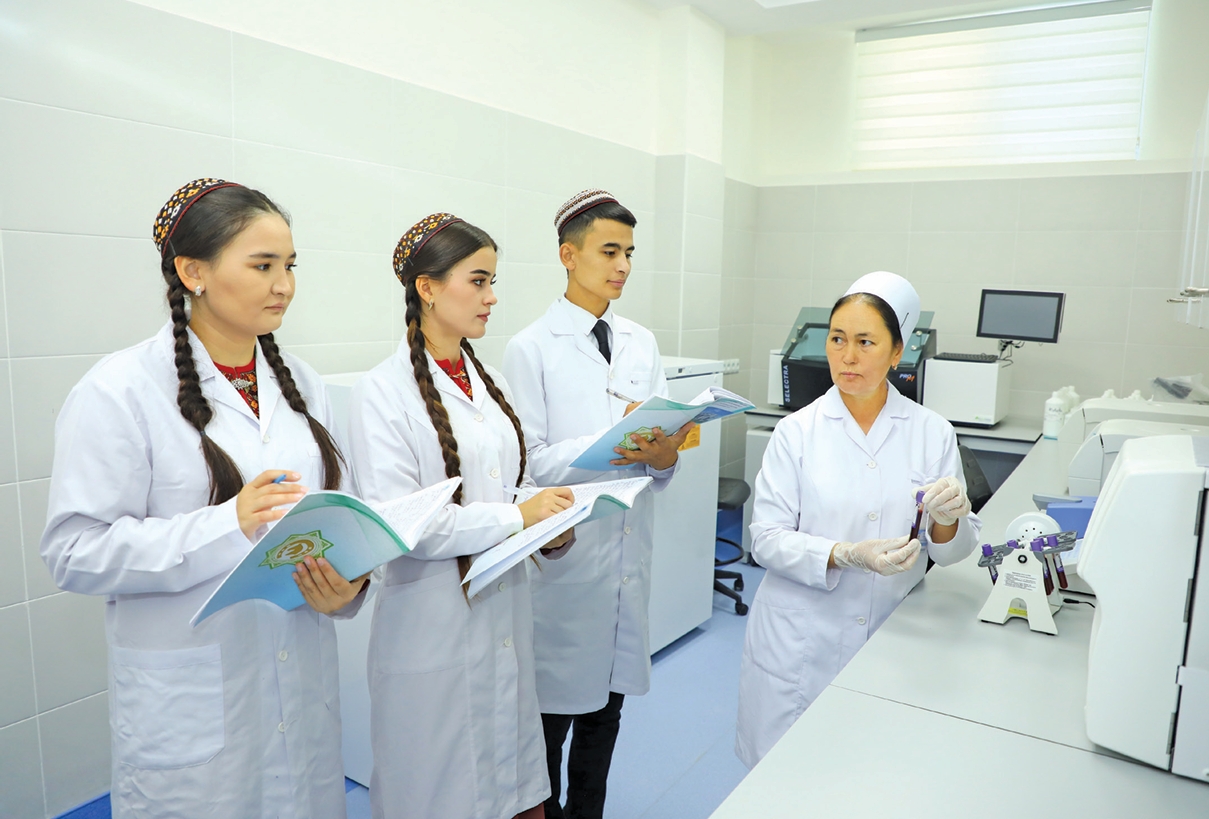
Hematological studies of Ahalteke horses' blood are carried out based on the methods adopted for the HORIBA ABX Micros ESV 60 hemoanalyzer. Biochemical blood analysis is carried out using the MICROLAB 300 device. Hematological blood tests are performed on blood samples taken using an EDTA tube for the following parameters: Blood biochemistry: blood samples obtained without anticoagulants, serum (in liquid form) is tested for the following parameters: glucose, AST, ALT. At the end of the study, statistical analysis will be performed using one-way ANOVA to determine differences between groups. It will allow for an extended analysis of the obtained data using Duncan's multi-range testing method.
In general, the study of the norms of biochemical and hematological indices of Ahalteke horses' blood is an important step in improving the methods of care, treatment and training of racehorses. These studies are designed to help preserve the breeding purity and health of horses, to use their potential to the maximum and to increase their productivity.
Geldi GURBANOV,
Head of the Chemical-Toxicology Subdepartment
of the Veterinary Laboratory
Department of the Scientific and Production Center for Horse Breeding
(from the pages of the magazine “Heavenly Ahalteke Horses” No. 1(27)2025)