

In the Era of Revival of the New Epoch of the Powerful State, thanks to the efforts of our esteemed President Serdar Berdimuhamedov, multiplying the world fame of Akhalteke horses, improving their exterior characteristics, and modernizing the quality of selection and breeding work have become one of the priority directions of state policy.
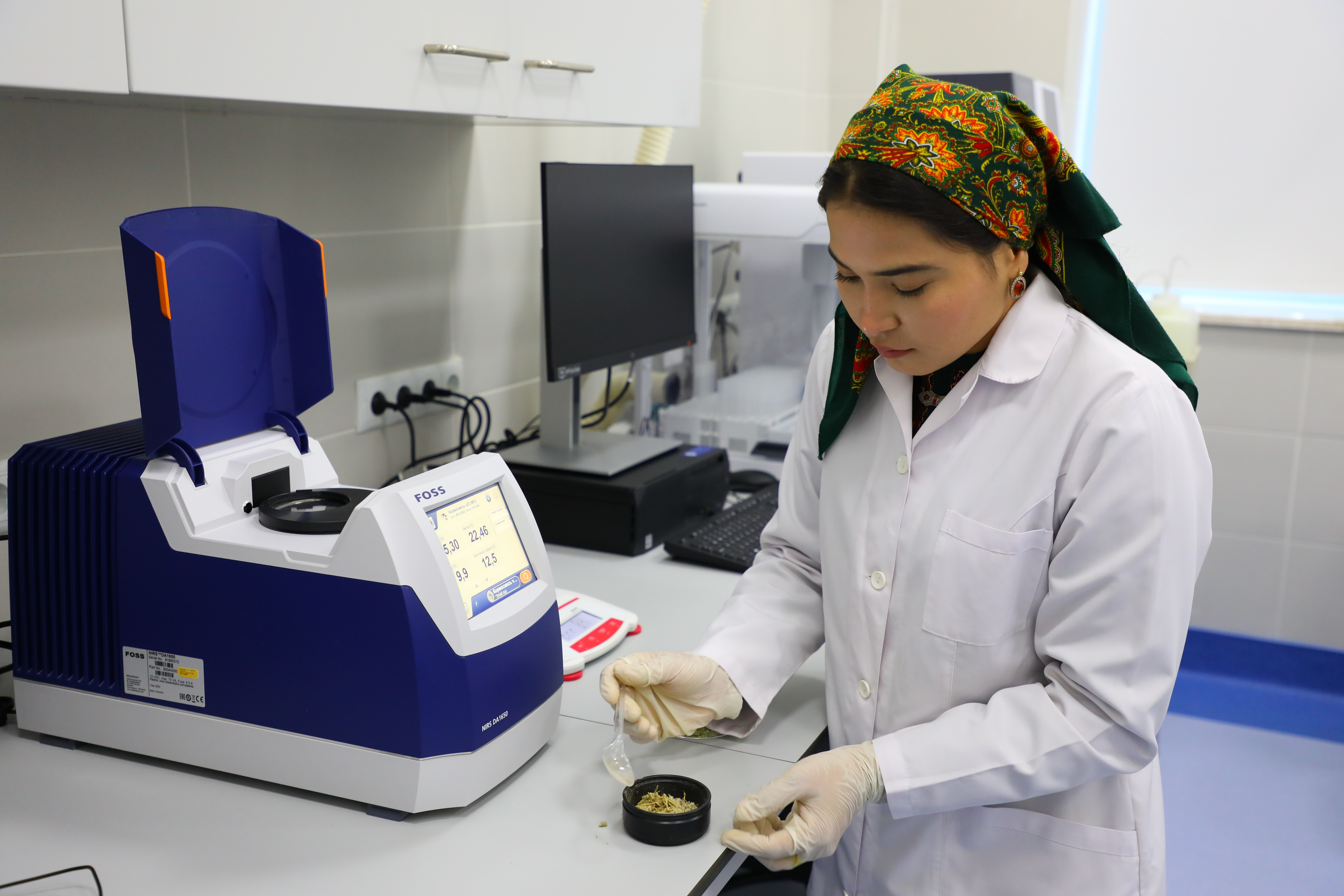
Currently, the Scientific and Production Center of Horse Breeding systematically conducts scientific research on enriching the diet of horses and increasing feed efficiency. As part of the scientific work carried out in this direction, the phytotherapeutic potential of endemic and cosmopolitan medicinal plants growing in mountain gorges, the Karakum Desert, and along the water bodies of Turkmenistan is analyzed on a scientific basis. The multi-volume scientific encyclopedic book "Medicinal Plants of Turkmenistan," created by the wisdom of our Hero-Arkadag, provides great assistance in studying the beneficial effects of our country's medicinal plants on strengthening the immune system and the general physiological state of horses. This creates a scientific base for protecting the health of horses using natural medicines in horse breeding.
The results of scientific research conducted in world practice have shown that enriching the diet with extracts or the ground form of such medicinal plants as rosehip and white bryony has a positive effect on hemoglobin levels in the blood and the general physiological condition of horses. Along with this, these additives strengthen the non-specific resistance of the body to various infectious and environmental stress factors. As a result, the use of these medicinal plants as a feed additive in horse breeding is an environmentally friendly and effective method for maintaining horse health and increasing their activity.
In addition, Bermuda grass (Cynodon dactylon), which has been widely studied on a scientific basis in recent years, occupies a special place in world practice regarding the health enhancement and disease prevention of horses. As is well known, Turkmen seis (horse trainers), by feeding Bermuda grass to horses, achieved not only their fattening but also blood purification, muscle strengthening, and increased endurance. In the Turkmen art of horse training (seis art), Bermuda grass is considered the "steel of the horse," serving as one of the main sources of feed for burning excess fat in the horse's body and preparing it for competitions. According to the observations of experienced trainers, in horses receiving Bermuda grass, breathing becomes clean and normalized, and their stamina increases.
Studies conducted by V. Mangathayaru (2009) and other scientists have shown that Bermuda grass possesses an immunomodulatory effect, and the antioxidants contained in it neutralize free radicals, ensuring the overall health of the horse. Studies by K.M. Nadkarni (2002) scientifically confirmed the healing properties of Bermuda grass and its positive effect on blood composition. Thus, the use of these types of medicinal plants as a feed additive in horse breeding serves as an effective and environmentally friendly method for preserving the health of horses and increasing their activity.
Thus, the widespread introduction of medicinal plants into the diet of horses in the horse breeding industry not only improves the quality of their nutrition but also creates new conditions for perfecting the art of horse training on a scientific basis. The combined action of natural compounds—namely lipids, proteins, and antioxidants contained in plants such as rosehip (Rosa canina), white bryony (Bryonia dioica), and Bermuda grass (Cynodon dactylon)—helps maintain stable hemoglobin levels in the blood of horses. The results of the research conducted have confirmed that these plant supplements increase the appetite and physiological activity of horses, allowing for their effective use during preparation for sports competitions and during recovery stages. Along with this, the environmental purity and naturalness of this method are important for creating a nutritional system in Turkmenistan's horse breeding industry that complies with international standards. In the future, the scientific study of other species of medicinal plants and the expansion of their application in horse breeding will pave the way for new scientific discoveries in safeguarding horse health and improving their athletic performance.
Gulshat MEREDOVA,
Chief Researcher Scientific and Production
Center for Horse Breeding of the
"Türkmen atlary" State Association